
In today’s fast-paced digital landscape, businesses of all sizes are leveraging data to make informed decisions. At the heart of this transformation is a data-driven approach that turns raw information into actionable insights. Whether you’re a small startup or an established enterprise, understanding how to use data effectively can be the key to unlocking sustainable growth. This comprehensive guide will walk you through everything you need to know—from foundational concepts to advanced strategies—helping you apply insights strategically to propel your business forward.
Introduction
At its core, marketing analytics is the structured process of collecting, analyzing, and interpreting data generated from marketing activities to support better decision-making. Rather than simply tracking likes, impressions, or clicks, this approach focuses on understanding customer behavior, measuring campaign effectiveness, and identifying trends that directly influence business growth.
Without a data-backed framework, many businesses rely on assumptions instead of insights. Imagine running campaigns without knowing which channels generate the highest conversions or deliver the strongest return on investment. This lack of clarity is where organizations often fall short. By relying on performance data, businesses gain clear visibility into what works and what doesn’t, allowing them to optimize strategies, reduce wasted spend, and improve overall results.
Industry research consistently highlights the impact of data-driven decision-making on revenue growth. Businesses that adopt insight-led marketing strategies often achieve significantly higher growth compared to those that rely on intuition alone. This clearly demonstrates that using data to guide marketing decisions is not a passing trend—it’s a proven driver of competitive advantage.
The rapid advancement of digital technology has made data collection and performance measurement more accessible than ever. Tools such as web analytics platforms, marketing automation systems, and AI-powered solutions allow businesses to track, measure, and analyze performance in real time. However, success requires more than just access to tools; it demands a strategic mindset—one that turns insights into action through thoughtful interpretation and execution.
Understanding the Basics of Data-Driven Marketing
At its core, data-driven marketing is about transforming raw information into actionable decisions. It relies on key performance metrics such as customer acquisition cost (CAC), lifetime value (LTV), conversion rates, and engagement levels. These indicators help measure how effective different marketing channels are, including email, social media, SEO, and paid advertising.
A foundational element of this approach is accurate data collection. This begins with implementing proper tracking systems across websites and mobile applications. Tools like Google Tag Manager make it possible to monitor user behavior and interactions efficiently. Once the data is collected, the analysis phase begins, where software tools process the information to uncover meaningful trends and patterns—an essential function of marketing analytics.
For example, if email open rates are strong but click-through rates remain low, data analysis can reveal where the problem lies. The subject lines may attract attention, but the content may not encourage action. Identifying these gaps allows marketers to refine messaging and improve performance. One common mistake among beginners is ignoring data quality—poor or inconsistent data leads to unreliable insights. Ensuring proper data validation is essential for accurate conclusions.
This process is not static; it grows alongside your business. As operations scale, advanced techniques such as predictive analysis can be introduced to forecast outcomes and identify future opportunities. Using insights proactively enables businesses to anticipate marketing changes, adapt strategies early, and maintain a competitive edge.
The Benefits of Implementing Marketing Analytics
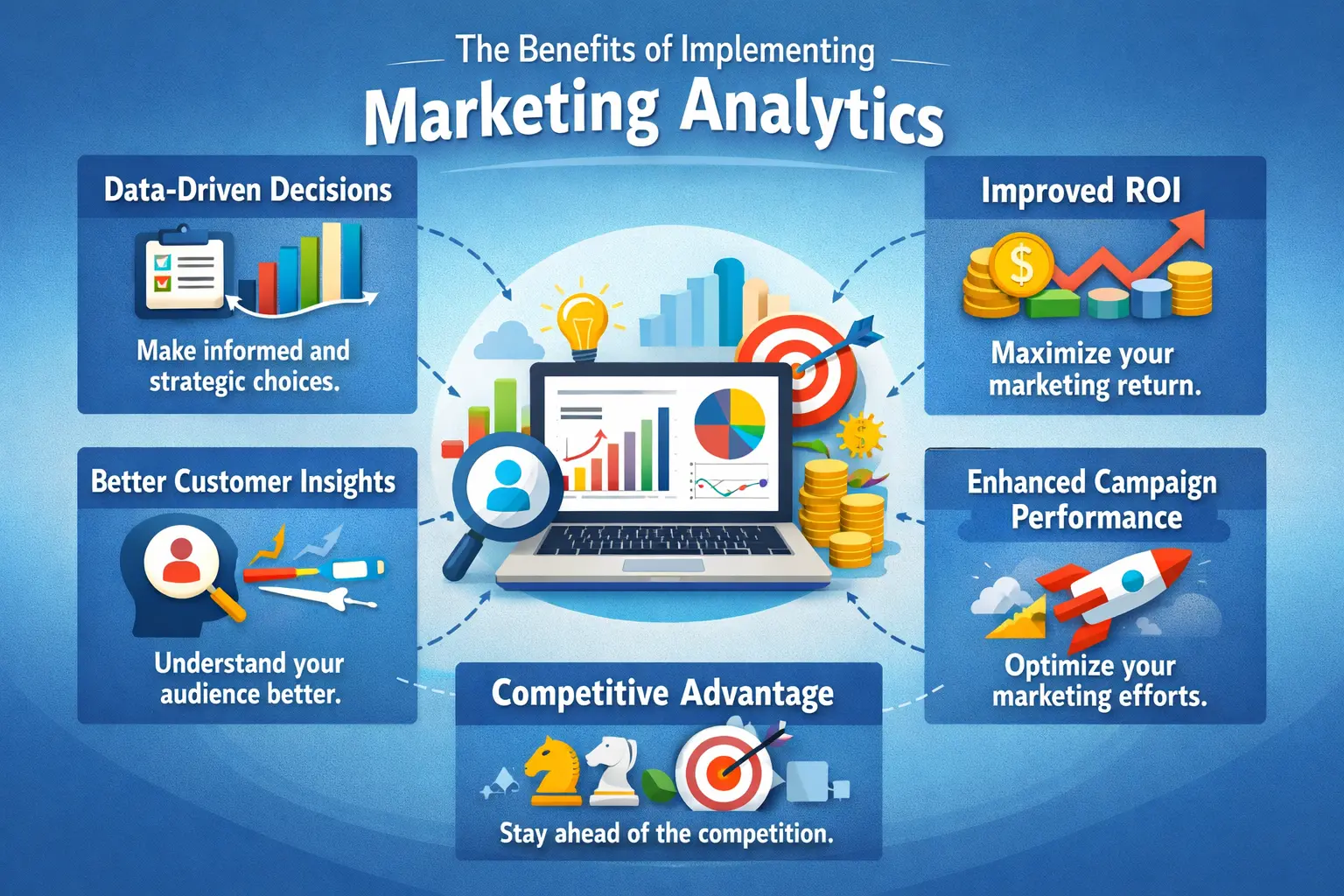
Why should businesses invest time and resources into marketing analytics? The answer lies in its wide-ranging and measurable benefits. Marketing analytics empowers organizations to make smarter decisions, gain deeper customer insights, and drive sustainable growth. In today’s competitive landscape, relying on intuition alone is no longer enough—marketing analytics turns data into direction.
One of the most significant advantages of marketing analytics is improved decision-making. Instead of basing marketing strategies on assumptions or gut feelings, businesses can rely on real, data-driven insights. Marketing analytics reduces uncertainty, minimizes risk, and increases the likelihood of campaign success by clearly showing what works and what doesn’t.
Marketing analytics also plays a crucial role in understanding customers. By analyzing behavioral, demographic, and engagement data, businesses can segment audiences more accurately and create highly targeted campaigns. Personalized marketing efforts powered by marketing analytics lead to higher engagement, stronger customer loyalty, and improved conversion rates. For instance, e-commerce brands use marketing analytics to deliver personalized product recommendations, significantly boosting sales and customer satisfaction.
Another key benefit of marketing analytics is cost efficiency. By identifying underperforming channels and low-ROI campaigns, marketing analytics enables businesses to allocate budgets more strategically. This prevents wasted spend and ensures marketing investments deliver maximum impact. According to McKinsey, data-driven organizations are 23 times more likely to acquire customers and six times more likely to retain them—clear evidence of how powerful marketing analytics can be.
Beyond performance optimization, marketing analytics encourages innovation and agility. By uncovering emerging trends and shifts in consumer behavior, businesses can test new ideas, refine strategies, and stay ahead of competitors. Marketing analytics also supports compliance and risk management, particularly in data-sensitive or regulated industries, by providing transparent and measurable processes.
In short, integrating marketing analytics into your marketing operations is no longer optional. Marketing analytics is essential for driving efficiency, improving customer experiences, and achieving long-term business growth in a data-driven world.
Essential Tools for Marketing Analytics
To get started with marketing analytics, you need the right tools. Google Analytics is a free staple, offering insights into website traffic, user demographics, and behavior. It’s user-friendly and integrates with other Google services like Ads and Search Console.
For more advanced marketing analytics, consider HubSpot. It combines CRM with analytics, tracking the entire customer journey. Features like A/B testing and lead scoring make it ideal for inbound marketing.
Adobe Analytics provides enterprise-level marketing analytics with real-time data processing and AI-driven insights. It’s perfect for large-scale operations needing deep customization.
Don’t forget social media-specific tools. Facebook Insights and Twitter Analytics (now X Analytics) offer platform-native marketing analytics. For email, Mailchimp’s reporting dashboard tracks opens, clicks, and unsubscribes.
SEO tools like SEMrush or Ahrefs enhance marketing analytics by monitoring keyword performance and backlinks. If you’re into big data, Tableau or Power BI visualize complex datasets, making marketing analytics more digestible.
Choosing tools depends on your business size and needs. Start small, scale as you grow. Remember, the best marketing analytics tools are those you actually use consistently.
Step-by-Step Guide to Implementing Marketing Analytics
Implementing marketing analytics doesn’t have to be overwhelming. Follow this step-by-step guide to integrate it seamlessly.
Step 1: Define Your Goals. What do you want from marketing analytics? Increase leads? Boost sales? Reduce churn? Clear objectives guide your data focus.
Step 2: Set Up Data Collection. Install tracking codes on your digital assets. Use UTM parameters for campaign tracking to attribute traffic accurately in marketing analytics.
Step 3: Choose Metrics and KPIs. Select relevant indicators like ROI, CTR, and bounce rates. Align them with your goals for effective marketing analytics.
Step 4: Analyze Data Regularly. Schedule weekly reviews. Use dashboards to spot anomalies. Marketing analytics thrives on consistent monitoring.
Step 5: Act on Insights. Don’t just collect data—apply it. If marketing analytics shows paid search outperforms organic, invest more there.
Step 6: Test and Iterate. Run experiments, measure results with marketing analytics, and refine. A/B testing is crucial.
Step 7: Train Your Team. Ensure everyone understands marketing analytics. Workshops or online courses can help.
By following these steps, you’ll embed marketing analytics into your culture, driving continuous improvement.
Advanced Strategies in Data-Driven Marketing
Once the fundamentals are in place, businesses can elevate their data-driven approach by adopting advanced techniques that deliver deeper insights and stronger competitive advantages. These strategies go beyond reporting past performance—they enable brands to predict outcomes, optimize customer journeys, and automate decision-making at scale through marketing analytics.
Predictive modeling is one of the most powerful advanced techniques. By leveraging machine learning algorithms, businesses can forecast customer behavior such as purchase likelihood, churn risk, and future demand. Tools like Python’s scikit-learn and Google BigQuery ML make predictive modeling accessible even for mid-sized organizations, allowing teams to anticipate trends instead of reacting to them.
Attribution modeling is another critical component of advanced insight generation. Traditional single-touch models often misrepresent how channels perform. Multi-touch attribution assigns value to every interaction across the customer journey, offering a more accurate view of how different channels contribute to conversions. This deeper understanding helps businesses allocate budgets more effectively and maximize return on investment.
Customer Lifetime Value (CLV) analysis further strengthens strategic decision-making by aligning marketing efforts with long-term profitability. A commonly used formula is:
CLV = (Average Purchase Value × Purchase Frequency × Customer Lifespan) – Customer Acquisition Cost (CAC).
By using CLV insights, businesses can confidently determine how much to invest in customer acquisition and retention initiatives.
The integration of data insights with artificial intelligence unlocks powerful automation opportunities. AI-driven systems can analyze customer interactions in real time, enabling chatbots, recommendation engines, and personalization tools to deliver tailored experiences instantly. This improves engagement while significantly reducing manual effort.
Cross-channel insight generation is essential in today’s omnichannel environment. By unifying data from email, social platforms, paid advertising, and websites, businesses gain a holistic view of customer behavior. Platforms like Mixpanel excel at connecting these touchpoints, helping teams understand user movement across channels and identify optimization opportunities.
Ethical considerations are also a vital part of modern data strategies. Responsible data collection, compliance with privacy regulations such as GDPR, and transparent usage practices are non-negotiable. Ethical use of customer data not only ensures compliance but also builds long-term trust and brand credibility.
When applied strategically, these advanced techniques transform data from a reporting function into a powerful driver of innovation, efficiency, and sustainable business growth.
Real-World Case Studies of Data-Driven Marketing Success
Let’s explore how data-driven decision-making has fueled growth across different types of businesses.
Case Study 1: Netflix
Netflix analyzes viewer behavior and content consumption patterns to deliver personalized recommendations. This tailored experience keeps subscribers engaged and plays a major role in customer retention and long-term growth—an approach rooted in marketing analytics.
Case Study 2: Amazon
Amazon’s recommendation engine is driven by detailed tracking of browsing history and purchase behavior. By continuously optimizing the customer experience, Amazon generates a significant portion of its sales through personalized product suggestions, strengthening both conversion rates and customer satisfaction.
Case Study 3: Starbucks
Through its mobile app, Starbucks tracks purchase history and customer preferences to deliver targeted offers and rewards. This insight-led approach has significantly increased engagement with its loyalty program and improved repeat purchase rates.
Case Study 4: A Small E-commerce Brand
A boutique online store analyzed website performance data to identify its highest-converting traffic sources. By reallocating budget toward organic search optimization, the brand increased revenue by 40% within a short period.
Common Challenges in Marketing Analytics and How to Overcome Them
While the benefits of marketing analytics are undeniable, implementing marketing analytics effectively comes with its own set of challenges. Many businesses struggle not because marketing analytics lacks value, but because of issues related to data management, skills, and compliance. Understanding these challenges—and knowing how to overcome them—is essential for successful marketing analytics adoption.
Challenge 1: Data Overload in Marketing Analytics
One of the most common challenges in marketing analytics is data overload. Businesses collect massive amounts of data from websites, social media, paid ads, email campaigns, and CRM systems. Without a clear strategy, marketing analytics can become overwhelming, making it difficult to extract meaningful insights.
Solution:
To overcome data overload, marketing analytics should focus on key performance indicators (KPIs) that align with business goals. Instead of tracking everything, prioritize metrics that directly impact revenue and growth. Data visualization tools such as dashboards and reporting platforms help simplify complex marketing analytics data, making insights easier to understand and act upon.
Challenge 2: Integration Issues Across Marketing Analytics Platforms
Another major obstacle in marketing analytics is data fragmentation. Many organizations use multiple tools that operate in silos, leading to incomplete or inconsistent insights. Disconnected data sources limit the effectiveness of marketing analytics and make accurate reporting difficult.
Solution:
Unified marketing analytics platforms help break down data silos by integrating multiple data sources into a single view. Tools like Google Data Studio (Looker Studio), marketing automation platforms, and customer data platforms (CDPs) allow businesses to centralize marketing analytics data and gain a holistic understanding of performance across channels.
Challenge 3: Skill Gaps in Marketing Analytics
Marketing analytics requires a blend of marketing knowledge, analytical thinking, and technical skills. Many teams lack the expertise needed to interpret data correctly or apply insights strategically, which reduces the impact of marketing analytics initiatives.
Solution:
To address this challenge, businesses should invest in training and upskilling their teams in marketing analytics. Online courses, workshops, and certifications can improve data literacy. Alternatively, hiring marketing analytics specialists or working with experienced consultants ensures that data-driven insights are used effectively.
Challenge 4: Privacy and Compliance Concerns in Marketing Analytics
Data privacy regulations such as GDPR and other regional laws have made marketing analytics more complex. Improper data handling can lead to legal risks, fines, and loss of customer trust, making compliance a critical challenge in marketing analytics.
Solution:
Privacy-first marketing analytics strategies are essential. Businesses should implement anonymized data collection, obtain clear user consent, and follow transparent data usage practices. Ethical marketing analytics not only ensures compliance but also builds trust and long-term relationships with customers.
Challenge 5: Inaccurate or Poor-Quality Data in Marketing Analytics
Marketing analytics is only as reliable as the data it uses. Inaccurate, incomplete, or outdated data can lead to flawed insights and poor decision-making, undermining the effectiveness of marketing analytics efforts.
Solution:
Regular data audits, validation checks, and standardized data collection processes are critical to maintaining data accuracy. Establishing clear governance practices ensures that marketing analytics data remains clean, consistent, and actionable.
Best Practices for Maximizing Data-Driven Marketing Insights
To gain the greatest value from data-driven marketing efforts, it’s essential to follow proven best practices that turn insights into measurable results.
Start with Clear Objectives:
Define specific business goals before analyzing data. Align insights with objectives such as lead generation, customer retention, or revenue growth to ensure efforts remain focused and actionable.
Use Real-Time Data:
Monitoring campaigns in real time allows teams to identify issues quickly and make immediate adjustments. Live performance tracking helps optimize results while campaigns are still active.
Foster a Data-Driven Culture:
Encourage teams across the organization to rely on insights when making decisions. When supported by marketing analytics, everyday actions become more consistent, transparent, and effective.
Leverage Automation:
Automation and AI-powered tools streamline repetitive tasks such as reporting, tracking, and performance analysis. This saves time, reduces human error, and allows teams to focus on strategic improvements.
Benchmark Performance:
Compare results against industry standards and competitors to understand where improvements are needed. Benchmarking provides valuable context and helps set realistic performance expectations.
Iterate Continuously:
Data-driven marketing is an ongoing process. Regular testing, analysis, and refinement ensure strategies evolve alongside customer behavior and market conditions.
Secure and Protect Data:
Safeguarding sensitive customer information is critical. Strong data security practices and compliance with privacy regulations help protect trust and minimize risk.
Collaborate Across Departments:
Encourage collaboration between marketing, sales, and other teams. Sharing insights across departments creates alignment, improves decision-making, and enhances overall business performance.
Future Trends in Data-Driven Marketing Insights
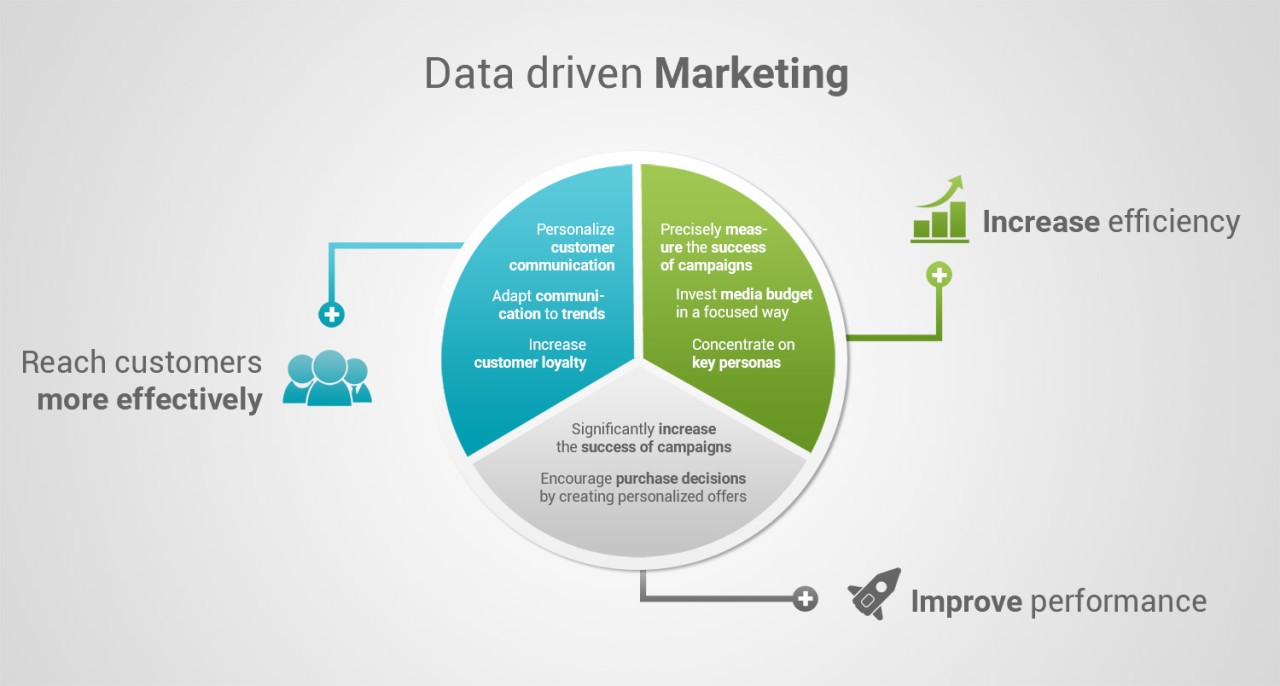
The future of data-driven marketing insights is dynamic, data-rich, and shaped by rapid technological advancements. As businesses generate and collect more information than ever before, the ability to transform raw data into actionable insights will become increasingly critical. Organizations that stay ahead of these evolving trends will gain a strong and lasting competitive advantage.
Artificial intelligence (AI) and machine learning are set to dominate the future of data-driven decision-making in marketing. AI-powered platforms will move beyond basic reporting and focus more on predictive and prescriptive insights. Predictive analysis will become a standard practice, enabling marketers to forecast customer behavior, anticipate purchase intent, and identify churn risks with greater accuracy. This shift allows businesses to act proactively rather than reacting after opportunities are missed.
The expansion of data sources will further reshape how insights are generated. Voice search, smart assistants, and Internet of Things (IoT) devices will create new streams of behavioral data. Advanced analysis techniques will evolve to process these emerging data points, offering deeper visibility into customer intent, preferences, and real-world interactions. As voice-driven searches increase, brands will need to optimize content and campaigns for conversational and intent-based queries.
Privacy-focused data strategies will also rise in importance. With stricter data regulations and growing consumer awareness, businesses will move toward ethical and transparent data practices. Zero-party data—information that customers voluntarily share—will become a core strategy. Privacy-first approaches not only ensure regulatory compliance but also help build trust and long-term customer relationships.
Blockchain technology may contribute to improving data integrity across digital marketing systems. By offering transparent and tamper-proof data records, blockchain-based solutions can enhance accuracy, reduce fraud, and ensure reliable attribution across multiple channels. This is especially valuable in paid advertising and affiliate marketing environments.
Emerging technologies such as augmented reality (AR) and virtual experiences will introduce entirely new performance metrics. AR-driven campaigns will generate interaction, engagement, and immersion data that traditional measurement models cannot capture. Measurement frameworks will adapt to evaluate these experiences, enabling brands to assess performance in innovative digital environments.
As these capabilities continue to evolve, staying informed and adaptable is essential for long-term success. Data-driven marketing insights are not static—they continuously evolve alongside new platforms, technologies, and changes in consumer behavior. Businesses that invest in continuous learning and experimentation will remain ahead of the curve.
Conclusion: Embrace Data-Driven Strategies for Business Growth
In conclusion, data-driven decision-making is no longer optional—it is essential for sustainable business growth. From understanding core concepts to implementing advanced strategies, businesses gain the ability to make informed decisions with confidence.
Insight-led approaches empower organizations to optimize campaigns, understand customer journeys, enhance personalization, and maximize return on investment. By overcoming implementation challenges and following best practices, businesses can unlock the full potential of data across all marketing channels.
Now is the time to act. Start integrating data-driven strategies into your marketing efforts today. Your competitors already are. With consistent analysis, strategic execution, and continuous optimization, your business can not only compete—but thrive in an increasingly data-focused world.